

Jikan · 8 min read · Natural Cleansing · Updated April 2026
Japan has long held some of the world's most enviable skincare traditions. From double cleansing to rice water toners, the philosophy of gentle, ingredient-led care runs deep. Sitting quietly at the heart of this tradition is one ingredient that deserves far more attention in the West: the persimmon.
Japanese persimmon soap — made with extract or fermented juice from the kaki fruit (Diospyros kaki) — is a cleanser unlike anything you'll find in a conventional skincare aisle. Rich in natural tannins, vitamin C, and antioxidants, it cleanses deeply, controls oil, fights acne-causing bacteria, and brightens the complexion — all without a single synthetic active in sight.
Here's everything you need to know about this ancient beauty ingredient and why it might just be the upgrade your daily wash deserves.
What is Japanese persimmon soap?
Japanese persimmon soap is a facial and body cleanser formulated with extracts, oil, or fermented juice derived from the kaki persimmon — a fruit that has been cultivated in Japan for well over a thousand years. The fruit itself is a nutritional powerhouse: high in vitamin C, beta-carotene, polyphenols, and natural tannins that give unripe persimmons their distinctive astringent quality.
In skincare terms, that astringency is a feature, not a bug. The same tannins that make an unripe persimmon pucker your mouth also bind to proteins on the skin's surface, temporarily tightening pores, reducing excess oil, and creating a natural barrier against bacteria. When these compounds are incorporated into a soap base — whether through cold-process, hot-process, or liquid soap methods — they deliver those benefits directly to your skin with every wash.
Persimmon soap can be found in bar and liquid form. The highest-quality versions use kakishibu (fermented persimmon juice), Diospyros kaki fruit extract, or persimmon seed oil as active ingredients, often alongside other traditional Japanese botanicals like green tea, rice bran, or yuzu.
The power of kakishibu
To understand why persimmon soap works so well, you need to understand kakishibu — the fermented juice of unripe kaki persimmons that has been a cornerstone of Japanese material culture since at least the 8th century.
Kakishibu (柿渋) was traditionally used to waterproof paper, preserve wood, strengthen fabric, and tan leather. Its remarkable preserving ability comes from a high concentration of condensed tannins — polyphenolic compounds that crosslink and bind with organic material on contact. Applied to skin, these same tannins act as a natural astringent and antimicrobial agent.
Kakishibu has been used in Japan for over 1,200 years. Its ability to inhibit bacterial growth, reduce oxidation, and strengthen whatever it touches made it indispensable — long before any of this could be explained by science.
Modern research has confirmed what traditional Japanese craftspeople and healers understood intuitively. Studies have shown that kakishibu tannins demonstrate broad-spectrum antimicrobial activity, inhibiting the growth of Cutibacterium acnes (the main acne-causing bacterium) and a range of other pathogens. They also neutralize odour-causing compounds, making kakishibu-based soaps especially effective as body cleansers.
Beyond the tannins, persimmon fruit is rich in vitamin C, beta-carotene, lycopene, catechins, and quercetin — a suite of antioxidants that work together to protect the skin from free radical damage, support collagen production, and promote an even, bright complexion.
Top skin benefits of Japanese persimmon soap
Pore tightening and oil control
The condensed tannins in persimmon soap bind temporarily to skin proteins, tightening the appearance of pores and reducing excess sebum production. For oily and combination skin types, this translates to a matte, refined finish that lasts throughout the day. Unlike harsh salicylic acid cleansers, persimmon tannins achieve this without disrupting the skin's natural acid mantle.
Acne and blemish reduction
Persimmon tannins inhibit the growth of Cutibacterium acnes, the bacteria primarily responsible for inflammatory acne. Regular use of persimmon soap as a facial cleanser can reduce the frequency and severity of breakouts over time, particularly for those with mild-to-moderate acne. Unlike antibiotic washes, persimmon's antimicrobial action is broad-spectrum and does not contribute to bacterial resistance.
Brightening and hyperpigmentation
The vitamin C content in persimmon extract helps fade post-inflammatory hyperpigmentation — the dark marks left behind after spots heal. With consistent use, most people notice a more even, luminous skin tone within six to eight weeks. Beta-carotene contributes additional antioxidant protection that supports skin radiance at the cellular level.
Antioxidant and anti-aging protection
Free radicals from UV exposure, pollution, and environmental stress are a leading driver of premature skin aging. The antioxidants in persimmon — vitamin C, beta-carotene, lycopene, catechins, and quercetin — work synergistically to neutralize these damaging molecules, supporting the integrity of collagen and elastin and delaying the visible signs of aging.
Natural deodorizing
One of kakishibu's most impressive and underappreciated properties is its ability to neutralize odour at the source. Rather than masking body odour with fragrance, persimmon tannins bind to and neutralize the sulfur and ammonia compounds produced by bacteria on the skin's surface. This makes persimmon soap one of the most effective natural deodorizing body bars available.
Gentle, barrier-friendly cleansing
Despite its powerful active properties, persimmon soap is surprisingly gentle when properly formulated. Unlike many astringent cleansers that strip the skin's moisture barrier, a well-made persimmon soap cleanses thoroughly without leaving the tight, dry feeling associated with conventional pore-minimizing products. Sensitive skin types should patch test first, but many find it far better tolerated than synthetic alternatives.
Which skin types benefit most?
Japanese persimmon soap is most transformative for oily, combination, and acne-prone skin types. The tannin-driven astringency directly addresses the core concerns of these skin categories — excess sebum, enlarged pores, and bacterial breakouts — with consistent, gentle efficacy.
Normal skin types will appreciate the brightening and antioxidant benefits without experiencing dryness, provided the soap is paired with a good moisturizer.
Dry and sensitive skin types can use persimmon soap, but should proceed carefully. Look for formulations that balance the persimmon extract with nourishing oils such as jojoba, shea, or avocado, and limit use to once daily rather than twice. Always follow with a hydrating serum or moisturizer to replenish any moisture the tannins may have drawn from the skin.
Mature skin can benefit significantly from the antioxidant and brightening properties, particularly for fading age spots and supporting a more radiant complexion.
How to use Japanese persimmon soap
As a facial cleanser
Step 1 — Wet your face with lukewarm water. Avoid hot water, which can strip the skin's natural oils and compromise the acid mantle before cleansing even begins.
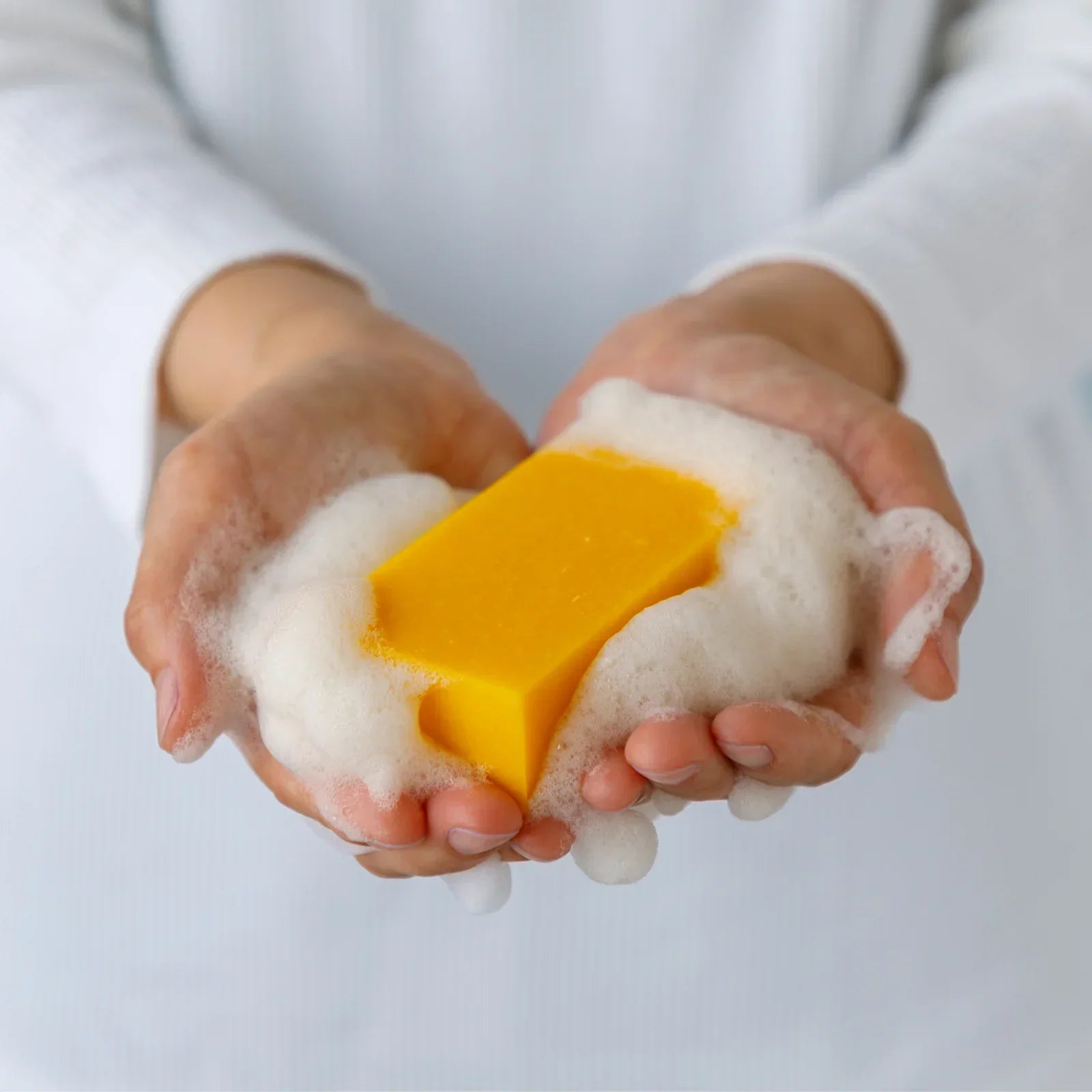
Step 2 — Build a lather in your palms first. Rather than rubbing the bar directly on your face, work the soap between wet hands to create a rich foam before applying it to skin.
Step 3 — Massage gently for 30 to 60 seconds. Use slow circular motions, paying extra attention to the T-zone, chin, and any congested areas. Give the persimmon compounds time to do their work.
Step 4 — Rinse with cool water. Cool water helps close pores and maximises the tightening effect of the tannins. Rinse thoroughly — any soap residue left on the skin can cause dryness.
Step 5 — Follow with your usual routine. Apply toner, serum, and moisturizer as normal. If you find the soap slightly drying, add a hydrating toner as the first step after cleansing.
As a body bar
Use persimmon soap in the shower as you would any bar soap. For maximum deodorizing benefit, allow the lather to remain on the skin for 30 to 60 seconds before rinsing — this gives the kakishibu tannins enough contact time to neutralize odour-causing compounds effectively. The back, chest, and underarm areas respond particularly well to persimmon body washing.
Frequency
For oily and acne-prone skin, twice daily use (morning and evening) is well tolerated by most. For dry or sensitive skin, once daily — ideally in the evening — is the better starting point. Build from there based on how your skin responds over the first two weeks.
What to look for when buying Japanese persimmon soap
As persimmon soap grows in popularity, the market has been flooded with products that list persimmon extract as a token ingredient while relying entirely on conventional soap bases. Here is how to identify a genuinely effective product.
Check the ingredient list. Look for Diospyros kaki fruit extract, kakishibu, or persimmon seed oil in the first half of the INCI list. If persimmon appears near the bottom among preservatives and fragrance, the concentration is likely too low to deliver meaningful benefits.
Prioritise cold-process formulations. Cold-process soap-making preserves the heat-sensitive antioxidants and vitamin C in persimmon extract. Many artisan Japanese soap makers use this method specifically to protect bioactive integrity. Hot-process and commercially manufactured soaps are more likely to have degraded the most beneficial compounds.
Look for complementary Japanese botanicals. The best persimmon soaps pair kakishibu with other synergistic ingredients from the Japanese botanical tradition — green tea extract, rice bran oil, yuzu essential oil, hinoki cedar, or konjac. These combinations reflect genuine formulation knowledge and tend to produce better skin outcomes than persimmon extract combined with generic Western soap ingredients.
Source matters. Persimmon cultivation in Japan is concentrated in regions including Nara, Wakayama, Gifu, and Fukuoka. Soaps that specify Japanese-sourced kaki, particularly from small-scale or organic growers, are more likely to use high-quality extract with a meaningful tannin concentration.
Avoid unnecessary additives. Synthetic fragrance, SLS, and parabens can undermine the benefits of persimmon extract and irritate sensitive skin. A clean, minimal ingredient list is a good sign in any persimmon soap worth buying.
Frequently asked questions
How long does it take to see results from persimmon soap?
Most people notice improvements in oiliness, texture, and skin clarity within two to three weeks of consistent daily use. Brightening effects — reduction of dark spots and a more even skin tone — typically take six to eight weeks to become clearly visible, which reflects the skin's natural cell turnover cycle. Patience and consistency are key.
Can I use persimmon soap if I have acne-prone skin?
Yes — in fact, acne-prone skin is one of the skin types that benefits most from persimmon soap. The combination of antimicrobial tannins (which inhibit acne-causing bacteria), astringent pore-tightening action, and anti-inflammatory antioxidants makes it a well-rounded natural option for managing breakouts. It works particularly well as a morning cleanser alongside a gentle evening routine.
Is Japanese persimmon soap suitable for sensitive skin?
It can be, depending on the formulation. Persimmon tannins are mild astringents and most people tolerate them well, but those with very reactive or eczema-prone skin should patch test on the inner wrist for 24 hours before facial use. Look for soaps that balance persimmon with soothing oils like jojoba, calendula, or oat — these help buffer any potential dryness from the tannins.
Can I use persimmon soap with retinol or exfoliating acids?
Yes, but with some care. Persimmon tannins already exert a mild resurfacing and pore-refining effect, so combining them with strong retinoids or high-concentration AHAs and BHAs in the same routine risks over-exfoliation. The simplest approach is to use persimmon soap in the morning and reserve your actives for an evening routine, keeping the two separated by several hours.
What does Japanese persimmon soap smell like?
Kakishibu has a distinctive warm, slightly earthy, and faintly fruity scent — often described as reminiscent of dried persimmon with subtle woody undertones. It is quite gentle and dissipates quickly after rinsing. Many artisan soaps combine persimmon with yuzu, hinoki cedar, or green tea to create a more refined fragrance profile. Products using synthetic persimmon fragrance rather than actual kakishibu extract will smell quite different — sweeter and more artificial.
Is persimmon soap safe to use during pregnancy?
Persimmon fruit extract is derived from a food-safe ingredient and topical use in soap form is generally considered low risk. That said, as with introducing any new skincare product during pregnancy, it is always worth checking with your midwife or healthcare provider before adding persimmon soap to your routine — especially if the formulation includes essential oils such as yuzu or hinoki.
Is persimmon soap just a trend or does it actually work?
Persimmon soap is far from a trend — kakishibu has been used in Japanese beauty and material culture for well over a thousand years. The efficacy of its active compounds is supported by a growing body of modern research, particularly around tannin-based antimicrobial activity and the antioxidant properties of persimmon polyphenols. It works best as part of a consistent daily routine rather than as a quick fix, and the results tend to be gradual, cumulative, and lasting.
Japanese persimmon soap is one of those rare skincare ingredients that rewards closer inspection. The more you understand the science behind kakishibu, the more compelling it becomes — not as a novelty or a trend, but as a genuinely effective, time-tested cleanser rooted in one of the world's most sophisticated beauty traditions.
If you're ready to make the switch, look for a cold-process bar with kakishibu or Diospyros kaki extract high on the ingredient list, give it six to eight weeks of consistent daily use, and let the results speak for themselves.